Blog
How to Spot a Fake Property Listing in Nigeria — and What to Do When You Find One
Buying your first home is exciting — and a little overwhelming. Between mortgages, inspections, and endless listings, it's easy to feel lost. But with the right guidance (and the right agent), you can turn confusion into confidence and make smart, secure decisions every step of the way.
Author
Aminu S. Muhammad
Published
Category
Guide

Author
Aminu S. Muhammad
Propabridge Team
What’s better than insider perks, pro tips, and surprises?
Sign up to get the most recent blog articles in your email every week.
Join now.
"In Nigeria, the fake listing isn't the exception. It's the norm. Until you know what to look for."
If you've spent more than 20 minutes searching for property in Nigeria, you've almost certainly encountered one. The listing looks perfect — great photos, reasonable price, ideal location. You call the number. Someone answers, asks you to pay an inspection fee, shows you something completely different, and disappears. Or worse — the property doesn't exist at all.
This guide exists so that never happens to you again.
1. The photos look too good
The first red flag is the listing that looks like a magazine shoot. Pristine white walls, international-standard finishes, professional lighting — for ₦800,000 a year in Kubwa. Nigerian real estate photography is rarely that polished. If the images look like they were lifted from a UK property website, they probably were.
What to do: Reverse image search every photo using Google Images. Right-click the photo, select "Search image," and see where else on the internet that image appears. Fake listings almost always use stolen photos.
2. The price is suspiciously low
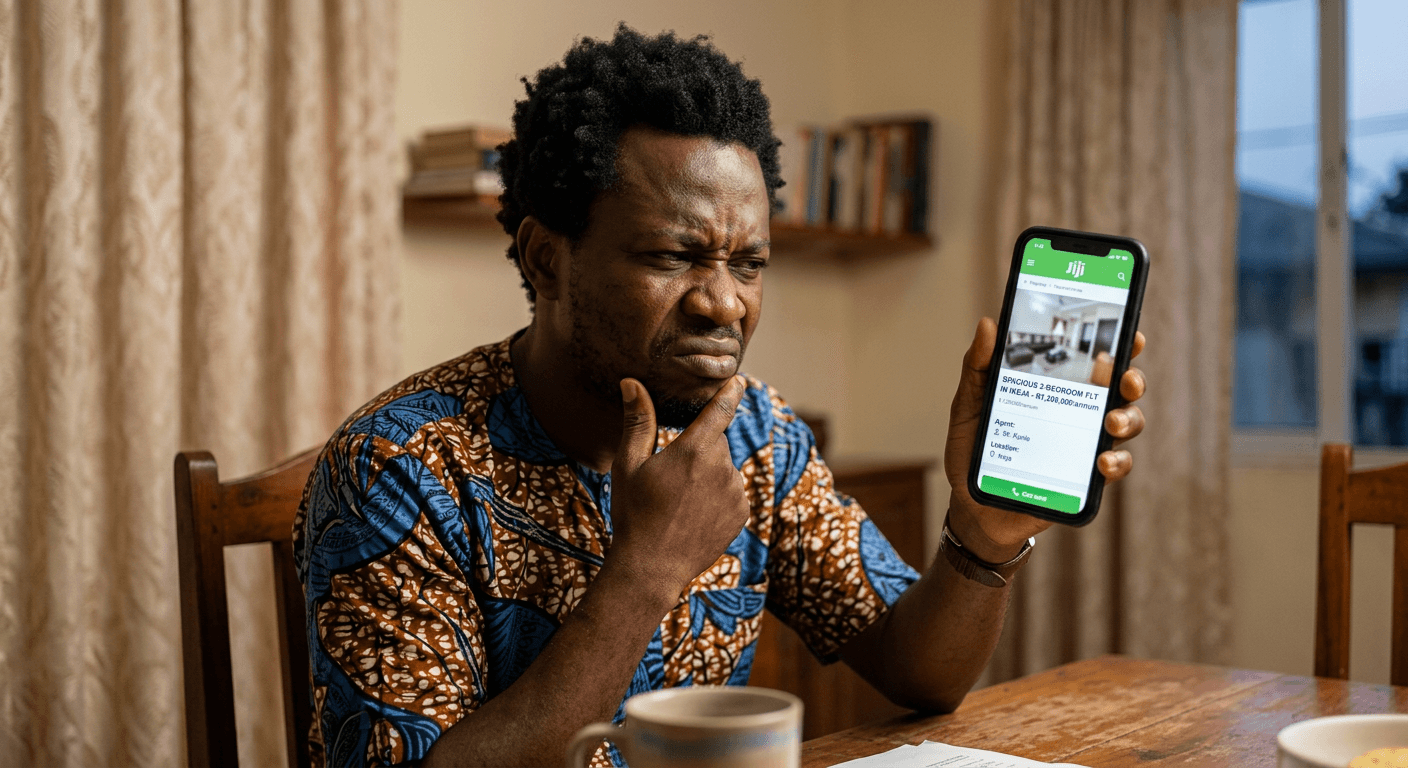
Every area in Abuja has a market range. A 3-bedroom flat in Gwarinpa rents for between ₦1.5M and ₦2.5M per year in 2026. If you see one listed at ₦700,000, it is not a bargain. It is bait.
Scammers price low deliberately — to generate urgency and high inquiry volume. The low price makes you overlook other warning signs.
What to do: Cross-reference the price against known market rates for the area. Our neighborhood guides on this blog are a good starting point. If it's more than 30% below market rate with no explanation, walk away.
3. They ask for money before you view
This is the single most common scam in Nigerian real estate. An "inspection fee," a "registration fee," a "commitment fee" — these are invented charges designed to extract money from you before you ever see the property.
No legitimate platform, landlord, or verified agency charges you to view a property. The viewing is how they demonstrate the product to you. You do not pay for a demonstration.
What to do: Refuse to pay any fee before physical inspection. If they push back, end the conversation. Propabridge never charges inspection fees — that policy exists precisely because of this scam.
4. The agent can't answer basic questions
A genuine landlord or verified agent knows the property they're representing. They know which floor it's on. They know if there's a borehole. They know the name of the estate or street. They've been inside it.
Scammers are working from a script with stolen photos. Ask specific questions: How many units are in the building? What's the transformer situation on that street? Is the BQ self-contained or shared? Watch how they respond.
What to do: Ask three to five specific questions that require real knowledge of the property. Hesitation, vague answers, or "I'll check and get back to you" on basic facts are red flags.
5. There's no verifiable address
Fake listings are deliberately vague about location. "Off Airport Road, Lugbe" tells you nothing. A legitimate listing has a full address — plot number, street name, estate name, and area.
What to do: Ask for the full address and verify it exists on Google Maps. Then ask the agent to show you the property on a map during your conversation. If they can't or won't, the listing isn't real.
6. The title documents don't exist or can't be shown
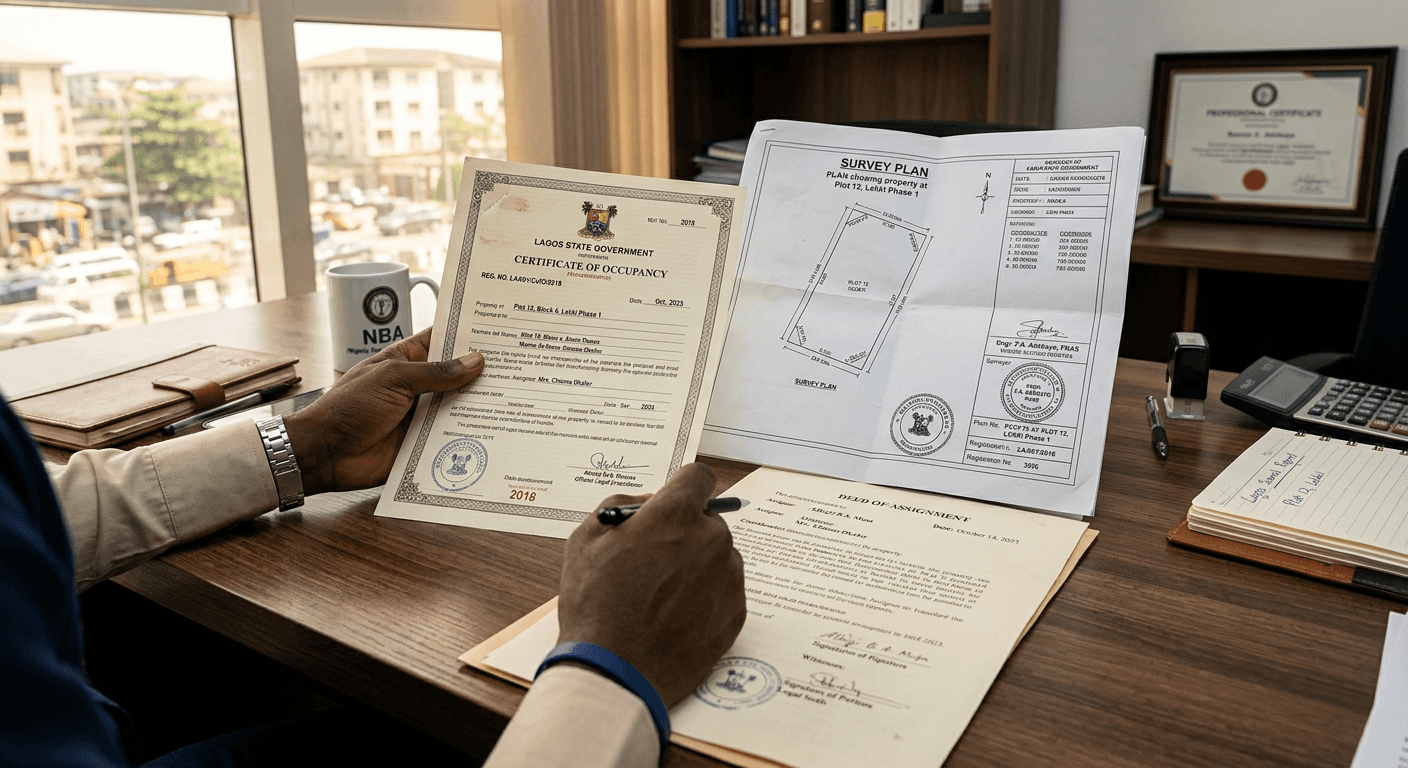
For any property purchase or long-term rental, you are entitled to see the original title document — Certificate of Occupancy (C of O), deed of assignment, or survey plan — before any money changes hands. Not a photocopy on WhatsApp. The original.
What to do: Ask specifically: "Can I see the original C of O before signing?" Any genuine property owner will say yes. Hesitation or excuses at this stage is a serious warning sign.
What to do when you find a fake listing
Don't just move on. Report it. On platforms like PropertyPro or Nigeria Property Centre, use the report function on the listing. On WhatsApp, block and report the number. If money has already been taken, report to the EFCC and your state's Consumer Protection Council.
And then — come to Propabridge, where every listing has already been through all six of these checks before you ever see it.
Ready to search listings that have already been verified for you? Chat with Propa at propabridge.com — zero inspection fees, zero fake photos.
Other Blogs